PIXNET Logo登入

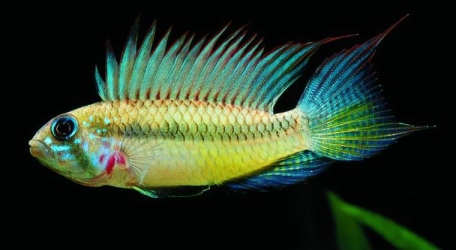
Dwarf cichlid 南美短雕

跳到主文

最近開始養魚 一開始從鬥魚...孔雀魚 然後 加上燈魚 結果現在迷上了短雕 這種餘種真的是很有吸影力 讓我完全陷入的很徹底 在這分享自己養的 網路上看到的 點點滴滴

部落格全站分類:寵物日記

  • 相簿
  • 部落格
  • 留言
  • 名片
  • 9月 30 週二 200814:16
  • 伊丽莎白(Apistogramma elizabethae)

http://x1999.blog.sohu.com/56322390.html

古老、神秘、且珍贵——用这个概念来形容伊丽莎白短鲷(Apistogramma elizabethae)相信并不过分。或许只有伊丽莎白才是唯一一种将素雅和华丽这两种原本矛盾的形容融合得天衣无缝者,并且从人工环境的饲养中具有一 定的挑战性,加之并非数量众多的野生采集,伊美莎白短鲷的弥足珍贵也就不足为奇了。

      1865至1866年期间,著名的短鲷学者阿卡西(L.Agassiz)在其第二任夫人伊丽莎白(Elizabeth Cabot cary Agassiz)在巴西境内的亚马逊河上游支流乌奥佩斯河(Rio Uaupes)流域进行科考时,意外地发现了一种类似阿卡西短鲷但又存在明显不同的全新鲷种,并将其记录在科考日记上。在阿卡西教授的日记上,他将这种新 发现的短鲷以其陪同伴游的夫人的名称进行命名以纪念彼此间的爱情,这就是伊丽莎白短鲷——Apistogramma elizabethae,一种暗喻爱情的女性化名称。

     伊丽莎白短鲷雄鱼在体形上呈现修长的纺锤状,体长仅限10cm,尾鳍依照年龄的递增会从圆形发展至竖琴状,最终形成如阿卡西短鲷那样的矛尖型尾鳍, 伊丽莎白短鲷雄鱼是所有短鲷品种中唯一一种在同一个体上会出现三种尾鳍形式的短鲷,尾鳍是色彩普遍为透明且不带花纹,但也有部分个体会因环境或食物因素导 致其尾鳍鳍条形成红色条纹状。同时,伊丽莎白短鲷雄鱼的背鳍长达3至5cm,夸示时其背鳍立显高耸挺拔,并且前五根背鳍鳍刺为分开独立状,臀鳍向后延伸, 呈现近透明的浅蓝色,但某些流域型个体会在臀鳍的外缘自外向内出现红色或橘黄色甚至紫蓝色的渲染。伊丽莎白短鲷的腹鳍和胸鳍通常无色透明,但腹鳍也曾发现 过呈现淡蓝色或黑色镶边的个体。另外,雄鱼在完全成熟后,在臀鳍、背鳍和腹鳍上会出现具有淡淡光泽的清晰片状斑点。

     就体色表现形态而言,伊丽莎白短鲷雄鱼体侧的黑色横向侧带纹异常明显,在夸示状态下会一直延长到尾柄基部,某些个体在眼部下方的鳃盖上会出现一条斜线向下的黑色竖纹。

     一部分雄鱼尚在亚成阶段就会出现如彩虹一样亮丽的红色表现,集中在由吻部至尾柄的侧线以下体表面,鉴于其红色表现所分布的区域因个体不同而有所区 别,既有色彩集中在鳃部的个体,也有整个侧线以下几乎全部染色的个体。雄鱼夸示时其红色素细胞迅速扩增,配合其高耸如标的背鳍和硕大的竖琴状尾鳍,致使鱼 体闪烁出摄人心魄的瞬间美感。

     伊丽莎白短鲷在色泽区分上,大致可分为三种色型。第一种黄色型个体,体色呈现浅红色或浅黄色的中性色调。某些个体并不出现侧线带以下的颜色增强特 征,而是周身均表现出黄色光泽。第二种为红色型,鉴定标准为其头部、腮部、胸部和腹部均表现为浓烈的血红色或橙红色,同时蓝色金属光泽遍布全身。第三种为 非常罕见的紫白色型,体色和各鳍呈现白色或淡紫罗兰色,偶尔带有略深色泽的鳍缘镶边,其黑色侧线纹相对并不明显,替代的是同样位于侧线上的两个粗大的圆形 黑斑,这点特征与伊丽莎白短鲷雌鱼的特征相似。德国于1992年9月初次引进伊丽莎白短鲷,当时是与其他短鲷一起混杂入口,进口商的记录上均为红色型个 体,没有具体采集地点的标识,就目前国内和台湾所集中的伊丽莎白短鲷来看,亦大多为红色型个体。

     伊丽莎白短鲷的雌鱼相对雄鱼来说就朴素得多,其体长不超过4cm,一般2.5-3cm的雌性个体就足可达到性成熟及繁殖。与雄鱼复杂多变的尾鳍生理 特征不同,雌鱼的尾鳍会一直保持为圆形,上装饰5-6道垂直近透明的纹路。其臀鳍通常无色透明,某些个体会出现3-4道半透明的纹路。雌鱼的侧线条纹极淡 而且相对纤细,通常会有两个或者三个圆形的横向斑点,偶尔也会呈现为椭圆形。腮颊的一侧有曲线状的细窄纹路自眼睛下部延伸至喉部。带仔中的雌鱼会显示出黄 色的体色,腹鳍会转变为黑色。

     就目前所获知的信息来看,伊丽莎白短鲷的分布区域主要集中在尼格罗河上游乌奥佩斯河(Rio Uaupes)主流及支流中,尤其是距离乌奥佩斯河与尼格罗河交汇点20公里处的特罗沃镇(Trovao)附近的小支流中,同时考虑到南美枯水季与洪水季 的交替特点,因此伊丽莎白短鲷也可能通过塔拉夸(Taraqua,乌奥佩斯河与尼格罗河交汇点)而进入尼格罗水域,并且的确记录有在尼格罗河上游的圣盖布 瑞尔(Sao Gabriel)采集到伊丽莎白短鲷。同时,乌奥佩斯河上游支流伊卡娜河(Rio Icana)及乌奥佩斯河河口附近的伊加拉佩.伊拉(Igarape)和伊加拉佩.库库拉(位于Igarape的一条小型支流)包括乌奥佩斯河下游的佩尼 拉湖(Logo Penera)均可发现大量的伊丽莎白短鲷。而位于伊卡娜河上游的图卡诺则是非常著名的伊丽莎白短鲷采集区域,遗憾的是目前已被巴西政府规划为国家公园保 护区,禁止执照采集者进入。图卡诺这个地名实际上是当地印帝安人所启,其真正的地理名称为提布拉里(Tiburari)。在佩尼拉湖中,同时也生存着另外 三种短鲷,它们是裴莉短鲷、红帆短鲷和美克宁短鲷。

     伊丽莎白短鲷所生存的水域为典型的黑水水系,它多半集中在岸边附近流速缓慢且落叶沉积丰富的酸性水域中,PH值范围通常为4.2-5.2,导电度 (TDS)为10us/cm左右,溶氧指标为4.3-5.0mg/L,正午水表温度在26-29度之间。伊丽莎白短鲷是一种典型的生活于枯枝腐叶中的品 种,其他生态资料采集并不完整,早期由比利时鱼类学者莱奥波尔德(King Leopo-ld)和植物学家高斯(J.P.Gosse)在1967年分别于特罗沃和伊加拉佩的采集记录来看,其缺乏详尽的数据记录。之后根据埃尔萨塞 (Elsasser)于1992年2月的枯水期所提供的采集数据来看,原生地的环境特点为一处砂质细白并且淤积深厚腐叶的黑水小溪流。同时我们借鉴了德国 短鲷学者罗默(Uwe Romer)教授的科考记录,罗默分别在1992-1994年间考察了图卡诺区域的同一采集地点,发现1994年所记录的水位尺标竟然比1992年的记录 整整减少了两米,并且在他们的停留期间水位再次持续下降21厘米,可见南美的雨季对生态造成的影响和改变。罗默所考察的溪流,水色为深棕色,深约5公尺, 宽约15米,尽管水质清澈,但是能见度却低于一米,延续考察其周边近50平方公里的环境,随处可见3-15厘米深的水洼。这条不知名的溪流的浅滩处到处都 游弋着长约5cm的小型加拉辛脂鲤和土铜色的大型水虎鱼,在沉积枯叶的岸边可以发现大量的鱼卵,小溪周围密布着各种棕榈树幼苗,甚至会遭遇到长约50cm 的类似于奥河剑鼻蝠一样的大型蝙蝠。在这样的小溪中,罗默发现了伊丽莎白短鲷的踪迹,它们大多生活浅滩与深水之间的一段水域,行动谨慎,行踪诡异,而且非 常敏感。然而,在浅水处的腐叶层中,却可以发现大量的伊丽莎白短鲷幼鱼,拥有巨大前螯的虾类和螃蟹盘踞在隐蔽的洞穴中,非常猖狂地在水中追逐捕食各种它们 可以猎杀的鱼类,包括伊丽莎白短鲷。

     基于尾型形状的相似,各鳍与身体之间的比例也相近,伊丽莎白短鲷在库兰德博士的研究结论里被认为与阿卡西短鲷存在近亲关系,但他强调:“阿卡西短鲷 在背鳍前部的飞刺色坠更深,伊丽莎白短鲷则非如此。伊丽莎白短鲷体侧线黑斑的特征与裴莉短鲷、美克宁短鲷以及红帆短鲷等三种出自乌奥佩斯河的品种存在相 似。”尽管存在分歧,库兰德依然认为伊丽莎白短鲷与阿卡西短鲷存在血统关联。在其曾做过的关于伊丽莎白短鲷的竖琴状尾型分类记录中,他遗憾地宣布这项研究 最终失败。库兰德认为这种类似阿卡西短鲷的品种在生物进化学上是一个重要的环节,阿卡西短鲷可能是阿卡西属系中最高级的物种。

     伊丽莎白的短鲷的饲养与繁殖其实只需掌握其中要领,加以重视,难度也不算让人望而缺步。勿论国外,国内及台湾均已成功地繁殖出这种短鲷。总结其饲养要领,伊帆简单归纳为以下四个部分:

     一、提供尽可能宽大的饲养水槽,建议缸体尺寸为60-100cm,尤其是繁殖缸。缸中尽可能采用接近原生地的环境布置,建议采用白色细砂,上铺一层 榄仁叶或橡树叶以营造出沉积腐叶层,适量的榄仁叶可提供仿原生的黑水环境,有益于短鲷的安定与促情。少许沉木和鲷罐为其敏感的忌生行为提供隐蔽场所,均以 一缸一对的方式进行饲育。

     
     二、酸性软水环境是饲养和繁殖的基础前提。以饲养的参照,建议PH值控制在6以下,总硬度不高于4,导电度需掌握在100us/cm范围以内,另需 注意水中的阿摩尼亚和亚硝酸盐须在安全范围以内,因为伊丽莎白短鲷对此尤其敏感。如考虑繁殖,则水质要求相应更加严谨,PH值须控制在4-5之间,碳酸盐 硬度低于2。繁殖水温建议为28度左右,不可超过30度。

     
     三、伊丽莎白短鲷的雌鱼会拥有漫长的发情期,从其发情至产卵的周期通常为15-20天,这一阶段雄鱼会频繁地被雌鱼所吸引,但却经常无法完成交配。 其间雄鱼的暴戾性格很容易将雌鱼伤害或者造成严重的紧迫,这就是为什么建议提供尽可能大的水槽进行饲养繁殖的道理之一,在饲主拥有足够的精力和时间的保障 下,采用时间分段隔离的方法自然可避免雌鱼免于落难,但对于某些时间有限但又希望爱鱼繁殖的玩家来说,大缸是提供安全保障的不二法门。

     四、伊丽莎白短鲷的交配过程与其他隐带丽鱼属短鲷并而二致,依然会采用轮流受精和排卵的方式提供卵子以发育雏形,雌鱼依据其体型大小一次产卵量在 80-150粒之间,多半集中在清晨及黄昏光线昏暗环境下进行。交配时间约30-60分钟,雌鱼会依照惯例迅速露出“狰狞面目”,将雄鱼强行驱逐。此时如 缸中放有小型脂鲤,可见雄鱼主动担负驱逐这些“入侵者”的任务,此时雌鱼则很容易允许雄鱼在离产卵地点不远处充当“国防”角色,但具体需要根据实际情况而 定。鱼卵经过48-72小时的孵化,即可陆续破卵而出,可投给少量的丰年虾无节幼虫或者“微虫”作为幼鱼的食物来源。幼鱼对于水质变化的敏感度非常高,因 水质变化带来的畸形率和折损率是同好中公认的伊丽莎白短鲷难以带大的中心问题,因此,在幼鱼抚育阶段,尤其初生的两个月里建议不要大量换水,同时采用少喂 多投的喂食办法进行给食,严防水质变化所带来的损耗,并且不推荐采用以烧杯为培育容器的人工孵化法,除非是具有相当经验并且以量为目的的繁殖场。

(繼續閱讀...)
文章標籤

kai79 發表在 痞客邦 留言(1) 人氣(497)

  • 個人分類:
▲top
  • 9月 30 週二 200814:14
  • 酋长短鲷介绍

酋长短鲷介绍

http://x1999.blog.sohu.com/56321749.html

许 久都不敢涉足酋长短鲷(A.bitaeniata)的领域,原因是因为其错宗复杂的流域迷思会导致裹足不前。作为双带家族(Bitaeniata group)的代表鱼种,我们不能轻易放弃对它的种种描述。因此,伊帆还是决定静下心来进入酋长短鲷的神秘世界,并希望能够整理一些“新颖”的思维方式来 面对人云亦云的酋长迷思。

     酋长短鲷,早期被作为Apistogramma pertense(红珍珠短鲷)的第二种个体类型。其英文学名“Bitaeniata”源自拉定文,由“Bi”和“taeniata”两部分组成,其中 “Bi”表示两条或一双;而“taeniata”则等于“taeniatus”,表示纹路。整合“Bitaeniata”,则表示存在两条横向侧纹的短 鲷,而通常的短鲷均只呈现出一条横向侧纹在侧面腹部。“Bitaeniata”同时也被作为双带家族的一个特征,该家族所包括的酋长短鲷 (A.bitaeniata)、金宝短鲷(A.mendezi)、双带短鲷(A.paucisquamis)、珍宝短鲷(A. sp.Miua)以及草莓短鲷(A.Deamante)均因具有体侧水平双侧纹的特征而被归类为同一家族成员。但酋长短鲷在该支系中的位置似乎与其他三种 短鲷存在一些距离,倒是与草莓短鲷(A.Deamante)似乎存在较近的关系。故尔草莓短鲷早期曾经暂时被认为是酋长短鲷的特殊地域种。

     瑞典鱼类分类学家库兰德(Kullander)博士通过对大量的酋长短鲷典型模式个体和非典型模式个体的记录与研究,在其所出版的学术论文中对各种 个体表现作出了逐一的陈述和介绍,同时删除及修改了关于酋长短鲷最初描绘结论——佩莱格林(Pellegrin)的研究结论认为酋长短鲷起源于马蒂拉河 (Rio Madeira);根据库兰德(Kullander)所发表的资料介绍:酋长短鲷最初的原始种群是由拉伯特(Rabot)所采集(注:库兰德 (Kullander)在原始文献中将其名称假定为罗伯特(Robet),但实际上仅仅只是因为拼写方法不同而已,也有文献记录其名称为 “A.Rabaut”。库兰德(Kullander)推测酋长短鲷事实上并非起源于马蒂拉河(Rio Madeira),而是源自哥伦比亚(Colombia)境内亚马逊河(Rio Amazonas)流域莱蒂西亚(Leticia)附近的自然保护区,而事实上拉伯特(Rabot)的确在这个区域内采集到大量的酋长短鲷标本个体。

     
     造成酋长短鲷原产地错误信息的原因也许可以追溯到商业渔民的观赏鱼捕捞历史,出口商试图掌控住红绿灯鱼(Paracheirodon innesi)的隐秘采集地点,而这种做法在今天仍然经常发生新发现的观赏鱼品种上,水族出口商对此分外看重。库兰德(Kullander)博士因此也无 法充分驳斥酋长短鲷起源于马蒂拉河(Rio Madeira)的说法。早前关于对马蒂拉河(Rio Madeira)的鱼群生态结构还缺乏足够的调查,但是在其间的发展过程中,这种状况已明显改变,尽管仍然无法确定酋长短鲷是否起源于马蒂拉河(Rio Madeira),但库兰德(Kullander)的假设也许是正确的。让我们期待更多具有科学凭据的研究结果公布于世,从而揭开酋长短鲷的起源之谜。

     在酋长短鲷的研究路程中,不同的时期分别由不同的学者对其进行过命名,不妨浏览一下以略饱所知:

     Apistogramma klausewitzi Meinken 1962

     Apistogramma kleei Meinken 1962

     Apistogramma pertense var bitaeniata Haseman 1961

     Apistogramma sweglesi Meinken 1961

     酋长短鲷的形态特征如下列特征组合:

     其身材相对修长,尾鳍呈竖琴状且上下边缘向外呈丝状延伸,其上布满棋盘格局或流苏状结合的尾鳍纹路。背鳍向外扩展并形成锯齿状的鳍膜,并会依据各时 的亢奋状态及情绪变化产生出蓝色及红色的“夸示色彩”。同时,背鳍前端飞刺会依据个体的差异出现高挑拔升的迹象,而末端亦会随鱼龄进程而向斜后方拉伸延 长。其修长且末端尖锐的腹鳍通常呈现略透明的蓝白色、黄色或者红色。酋长短鲷体侧会出现两条横向侧纹位于侧线上下,依据个体的不同,其身体的颜色表现充满 了高度的可变因素,这种表现形态可用多姿多彩来形容,因此几乎无法用笔墨来形容酋长短鲷的美丽,因为那本就是与“素雅”背道而驰的一种强烈色彩,并且会随 鱼只的情绪而或浓或淡。总体而言,红色、黄色及蓝色是酋长短鲷的主调色彩,从人类的欣赏角度而言,这三类色型亦是最容易取悦于人,故尔才造成酋长短鲷经久 多年依然盛行不衰的缘故。

     酋长短鲷的两性个体会显示出独立且显著的性别特征,华丽的雄鱼背后一如既往地陪伴着朴素的雌鱼,酋长短鲷雌鱼体形较小,不会出现如雄鱼那样的锔齿状 的高大背鳍,腹鳍及臀鳍则明显短小,通常呈现为近圆形,腹鳍鳍臂偶尔会出现黑色或者灰色的色染。在发情期时,雌鱼体色会转变为可爱的鹅黄色或橘黄色。

     
     尽管此品种经常自秘鲁进口,其栖息地亦多次被嗜好者所探访,但酋长短鲷依然未能得到很好的研究,水族学家通过对这些地区探险考察发现往往焦点更多地 集中采集熊猫短鲷(A.nijsseni)或者老鼠鱼(Corydoras),现有的关于酋长短鲷的分布资料及生态学因此基本上局限于保存材料(由库兰德 (Kullander)发表),以及斯特伊克(Staeck)的观察报告。

     根据目前所掌握的材料,酋长短鲷看来大部分分布在亚马逊河中上游,分布于哥伦比亚、秘鲁及巴西三国境内。其间包括乌卡雅莉河(Rio Ucayali)以及纳波河(Rio Napo)流域(包括普鲁伊斯奎.科恰(Punuisiqui Cocha)、祖恩加罗.科恰(Zungaro Cocha)、提那亚(tinaja)等地),以及远到亚马逊河位于巴西低地的流域段,如巴西境内的泰菲湖(Lago Tefe)以及马纳卡普鲁(Manacapuru)、伊加拉佩.安拉娜斯(Igarape do Ananas)、伊加拉佩.普鲁托(Igarape preto)以及胡鲁亚河(Rio Jurua)河口附近。当然,这个范围也包括我们耳熟能详的卡瑞罗(Careiro)地区、马慕利湖(Lago Marmuri-)、马拉奎利湖(Lago Manaquiri)以及稀有人迹的伊加拉佩.克罗爱地区(Coroai)等。

     根据国外的鉴定报道以及分别从秘鲁及巴西所引进的酋长流域型而观,东部(巴西)个体及西部(秘鲁)个体的多样化差异取决于尾鳍水平纹路的数量、色泽 强度以及身体与头部形状。通常东部区域个体(即所谓的巴西系酋长)颜色丰富,具有水平状尾鳍纹路,同时身型更为苗条,尤其是头部略显尖锐。长期以来,国内 一直在酋长流域型的迷思上纠缠不清,许多同好在人云亦云之间不知所云,伊帆自身也曾经经历过类似的情况,结果往往会发现最终的结果依然是一个永远没有答案 的迷思。尽管努力在网络和相关资料上试图寻找一个比较具有说服力的答案,但往往是一无所获。非常理解一名台湾鱼友的意见:当我们绞尽脑汁试图分辨出泰菲酋 长(A.bitaeniata from Lago Tefe)或者卡瑞罗酋长(A.bitaeniata from Careiro)时,似乎仅仅只有在日本和台湾的网站上能否发现这样的“课题”,而纵观比之台湾日本更为专业博大的德、美等水族大国的资讯,对流域型区分 的介绍几乎为零。也许,当我们注重于对形态和色泽表现的区分的时候,层出不穷的大量个体表现让我们目不暇接,而真正的真理是否会在某些行为模式或者交配特 征上呢?我们将所谓的巴西诸知名流域型酋长公布如下:

     一、 泰菲酋长(A.bitaeniata from “Lago Tefe”):
     

     二、 卡瑞罗酋长(A.bitaeniata from “Careiro”):
     

     三、 马慕利酋长(A.bitaeniata from “Lago Marmuri”):
     

     四、 马拉奎利酋长(A.bitaeniata from “Lago Manaquiri”):
     

     五、 克罗爱酋长(A.bitaeniata from “Coroai”):
     

     六、 雅鲁阿里酋长(A.bitaeniata from Jyanuari):
     

     也许是这些中文的命名法让我们产生了些许误会,很容易歧义地潜意识理解其中任一个流域型的酋长短鲷为单一物种,但其实不然。例如泰菲酋长,严格地说 其学名为统一的A.bitaeniata,而后坠的“from Lago Tefe”表示来自泰菲湖,那么整合意思为“来自泰菲湖的酋长短鲷”,仅此而已。即便是同批引进的确定来源的酋长短鲷同一流域型,在个体表现上也会存在诸 多特征。并且,巴西各地的酋长短鲷虽然可以自不同流域采集到,但彼此之间相隔的距离并非遥远,如卡瑞罗(Careiro)、马拉奎利湖(Lago Marmuri)以及马慕利湖(Lago Marmuri)之间的距离也仅数十公里,其间水道相互交融贯通,彼此流域的短鲷相互进入是非常正常的现象,那么,在这样的前提下,仅凭个体上的差异和表 现的不同,难道真的可以认为那就是一个典型的流域型特征吗?在一只野生酋长短鲷身上所集合的基因库是否已经遍及数百公里。当然,我们可以考虑到各流域的水 质、环境以及食物种源等自然因素,但在大自然的交替塑造下,洪水季节与干旱季节会导致各类短鲷离开自己的出身地而迁移往其他水域,这样的往来更形成了错综 复杂的关系。当然,我们应该去了解野生短鲷的原生地,但如若加入了商业价值观,人为的操作以及部分中间商的利欲熏心,也许一只明明是采集自卡瑞罗的酋长短 鲷,会因为长得比较象人们“心目”中的泰菲酋长而摇身一变...在伊帆的眼中,目前仅限于秘鲁系酋长与巴西系酋长之分,而某些众说纷纭的酋长流域型特征, 往往因为太容易被推翻而且缺乏理据而不能形成客观的评述。毕竟从专业的角度来说,我们的研究尚且相当肤浅。

     酋长短鲷为少数生活于黑水水系的隐带丽鱼属短鲷之一,就其微小的生态环境而论,尽管对它们的了解看似并不十分专业,但在野外采集的过程中,依然能够 沿着湖岸边的河流砂床附近发现它的存在,包括森林溪流中的黑水水洼。一般来说,酋长短鲷通常会被在布满枯萎落叶的水域被发现,库兰德 (Kullander)指出野外无流动迹象的水坑中采集到的酋长短鲷通常都异常消瘦,而从缓慢流动的水域或者良好的森林溪流中采集到的酋长短鲷看来状况良 好,因此他推断茶褐色且清澈的水域是酋长短鲷最佳的栖息地点。

     同时借鉴斯特伊克(Steck)在伊基多斯(Iquitos)附近纳内河(Rio Nanay)流域内采地点的详细报告,他所记录的采集点为一个布满泥污的小型湖泊,底床上铺满厚厚的沉积落叶,沿岸分散着大量的朽木枯枝,如同类型的其他 流域点一样。斯特伊克(Steck)在采集过程中也重点提到:酋长短鲷的采集必须从沉积落叶中进行搜寻。由此可见,酋长短鲷在原生地中具有高度的环境依赖 性。斯特伊克同时发现:各种体长约4.5厘米左右的鱼类被发现在深度为10-30厘米的沿岸水域中,除了酋长短鲷,斯特伊克(Steck)还在在同一地点 发现了阿卡西短鲷(A.agassizii)、大眼丽鱼(Acaronia nassa)、蒙面皇冠(Laetacara thayeri)、鞍斑宝丽鱼(Aequidens tetramerus)、月亮宝石(Biotodoma cupido)、喷点棋盘(Crenicara punctulata)、黎明矛丽鱼(Crenicichla lucius)以及粗中丽鱼(Mesonauta insignis)等。鉴于该栖息地中所生存的大量各类大型慈鲷,因此小型A属短鲷来略微有一些危险,例如:大眼丽鱼属(Acaronia)和矛丽鱼属 (Crenicichla)的主要猎物就是A属短鲷。复杂的生物链组成关系可能会影响此栖息地的物种分布情况,小型短鲷因此被限制在累积枯叶的浅滩水域以 避免大型猎食者的侵略和掠夺。原生地中的酋长短鲷占据着浅滩水域并且保持混居状态,水的总硬度难以衡量.因此判断低于1,甚至某些原生地水域的导电度通常 在10-20us之间,但水体PH值却并不似乌奥佩斯河(Rio Uaupes)那样显示出极低的酸性环境,酋长短鲷的原生地通常略低于中性水质,即6.0-7.0的范畴。但由于酋长短鲷广泛的分布范围,此值不应作为严 谨的参考标准,通常巴西境内所采集到的酋长短鲷所需PH值应略低于秘鲁境内所采集到的酋长短鲷,但也有另类。

     根据里奇特(Richter)在1988年的记录,酋长短鲷首次进口是由斯奇米德特.佛克(E.Schmidt .Focke)教授在1960年引进至德国汉堡(Hombrug Germany)。

     人工饲养酋长短鲷相当容易,这种鱼类需要尽可能宽敞的水槽,并铺以浅色的细小底砂,以及大量枯叶、岩石、沉木甚至稠密的水生植被组成的隐蔽场所。水 质则采用弱酸性软水。在这种情况下,酋长短鲷会感觉如同在原生地一样,并且会发展出更大的体型尺寸。建议能够在水槽中放入10-20只一组的小型灯鱼或者 另一些小型的上层鱼类,其他可满足混养条件的品种包括老鼠鱼(Corydoras)、胡子异型(Ancistrine)、小型棱形鸫鲷(pike cichlids)等。其实应该对某些名字听起来非常恐惧的鱼种以正确的观念和认识,健康的短鲷在存在鲶鱼(catfishes)或小型矛尾丽鱼 (Crenicichla)等凶猛肉食天敌的环境中依然能够顺利的繁衍后代,前提是需要有足够的隐蔽场所。当短鲷在孤立状态下时其繁殖成效不佳,仅仅只能 保持有限的产卵孵化数,混养的优点在于鱼类可以充分展示其社会活动模式,例如:酋长短鲷及它们的近亲物种在保持成对饲养时经常会表现出强烈的侵略攻击性, 甚至导致过早地斗殴致死。如果这些鱼类被饲养在大型水槽中,在没有天敌的情况下他们往往是一夫多妻制,雄鱼会建立自己的领土范围,争取尽可能多的雌性交 配。但如果有鱼类会对其子女构成威胁,它们则会寻找更大的生活场所,酋长短鲷具有稳定的社会联盟,它们会联合一起一起抵御会对它们的子代构成威胁的所有敌 人。

     在这种情况下,交配中的每个角色都得到了清晰的介定,雄鱼会随时捍卫孵化巢穴周围的环境,以及保护幼鱼及鱼卵(雄鱼的保护区为以孵化巢穴或幼鱼群为 中心的半径20厘米的范围内)。而雌鱼则直接负责照顾幼鱼及鱼卵并会排斥一切亲近者。如果出现了看似不可战胜的对手,无论雄鱼还是雌鱼都会尝试用嘴巴收集 尽可能多的幼鱼并迅速将它们带离危险。自然环境下,幼鱼大多都生活在亲鱼的嘴巴里,显然这只是酋长短鲷在不同模式下的社会行为的一部分,但最广泛的社会行 为表现在对巢穴的保养上,尤其在新组建配对单一对鱼模式下。另一方面保持鱼类及其捕食者的比例是避免盲目生育,只有对这些逃过捕食者且能够顺利繁殖。

     酋长短鲷比较类似于阿卡西短鲷(A.agassizii),达到性成熟的雌鱼的尾鳍短小,其产卵量亦仅为阿卡西短鲷的一半左右,这里我们会再次领略 到雄鱼、雌鱼及家庭的关系,为更好地培养幼鱼,饲养推荐每周坚持换水工作,其中水质应尽可能保持不变。促进雄鱼那引人注目的形态发展的理想途径就是提供弱 酸性软水且硝酸盐浓度极低的环境。酋长短鲷的雌鱼通常采用洞穴繁殖法,为避让其他短鲷它们会隐蔽鱼卵,通常在岩石上寻找缝隙用以安置鱼卵,让其他雄鱼无从 选择授精。

      即将成为母亲的雌鱼会周身覆盖柠檬黄色并带有黑色斑记,并积极地参与育雏。依据水温(24-26度)的差异,在鱼卵受精4天后孵出。孵化后经过5至6天 时间,幼鱼开始自由游泳,此时可以看到雌鱼会对幼鱼表现出强烈的色彩信号,甚至能够读懂其中的一些肢体语言。例如伊帆就曾经观察到酋长短鲷的雌鱼会以微弱 抖动身体后部的方式来聚拢幼鱼,而每当这种行为模式发生的时候,分散四周的幼鱼均会如条件反射一般向雌鱼靠拢。而当危险到来时雌鱼会不断地摆动其头部,并 伴有快速地冲击状游动。鱼苗的反应则类似于已知的大部分短鲷一样,那就是以震惊状的迅速下沉,并匍匐在底床上保持静止,当危险消失时,雌鱼才会游动于蛰伏 状态的幼鱼群以上,犹如唤醒死者一样,重新将幼鱼群带出。

     与其他配对繁殖的种鱼行为模式相反,酋长短鲷雄性种鱼会在稍后被允许参与护雏,这个品种的这种行为没有能够被观察到,每次雄鱼接近幼鱼群,这是一次 又一次赶走。如果同品种的雌鱼在繁殖水槽内,偶尔会产生警惕性行为,入侵的雌鱼会暂时性地放弃对子鱼的关注并迅速将身体转移为黄色,其目的是为了驱赶子鱼 的母亲离开它的孩子,但是大多时候子鱼的母亲会表现出更强的侵略性并取得最终的胜利。

     酋长短鲷在观赏水族业中已经确立了十几年的鉴赏和饲养历史,尤其突出的就是她们的多色现象,它经历了激烈的选育,今天已经出现许多异常鲜艳的血缘个 体,野外捕捞个体在采集和运输过程中的高死亡率是它们为何很少出现的原因,因为这些样品中往往大量存在布满寄生虫,他们必须隔离治疗,并且非常必要。使用 药物时应该谨慎,因为酋长短鲷对用药比较敏感。

(繼續閱讀...)
文章標籤

kai79 發表在 痞客邦 留言(1) 人氣(892)

  • 個人分類:
▲top
  • 9月 28 週日 200822:05
  • Apistogramma sp. Breitbinden II

  Apistogramma sp. Breitbinden.


Synonyms:
Apistogramma sp. Broad band
Apistogramma sp. Morrocoy sewer
Apistogramma sp. Windisch
Apistogramma sp. Sao Gabriel
Apistogramma sp. Kurzlapen-Breitbinden
Apistogramma Klausewitzi (Fahrig, 1971)

Etimologia:
“Breitbinden” or “Broad band” means “broadband” and makes reference to the suborbital line in the male, very wide and marked in comparison another Apistogrammas ”. Also it shows an preorbital and lateral line very marked. Apistogrammas.

Systematic:
Not this very clearly the classification by Group. It is had to him including in the Group gibbiceps by his similarity with this and personata Apistogramma, but also it has certain morphological similarities with the Group cacatuoides.
At the moment it is included to him in a new group: Group brevis.
(We are awaiting the new conformation of groups to review the list.)

Datz:
To 164-A 167

Order: Perciformes
Family: Cichlidae
Subfamily: Geophaginae
Tribe: Geophagini
Class: Actinopterygii
I generate: Apistogramma
Species: Apistogramma sp. Breitbinden
First import:
This species was concerned for the first time from Venezuela to Germany in 1970.

Distribution:
Originally collected in the high Black River near Sao Gabriel and Rio Uapes (the northwest of Brazil). Later one has captured also in means and Orinoco stop, near the population of Ayacucho Port and in River Inirida. This of Colombia, the west of Venezuela.


Maps Apistogramma distribution sp. Breitbinden


Map high Black River


Maps Orinoco high-means


Habitat:
Their natural habitat is calm sections of these rivers with abundant submerged forestation where easily they find shelter and place of deosve.

Morphology:
Extended and compressed species laterally, that demonstrates a quite noticeable sexual dimorphism in adult age. The male of about 8 cm, presents/displays a grayish tonality with colorations sea breams in the head and the dorsal fin, as well as a mark as a red spot in opérculo.
The typical lateral line in the sort in this species is present almost at any moment. What but it emphasizes of the male are the fins, usually they are extended emphasizing the volume in the form of lira and coverall the dorsal fin that name to the species due to lardo of the radii gives and coverall the width of the membranes unite that them.
Another remarkable aspect in the males gibbiceps is their heavy lips like the rest of species of the Group. The females however usually do not surpass the 5 cm. Present/display a brown-grayish coloration, happening to a tonality golden-cobrizo at the reproductive time. The fins are cleared and with very tenuous bordering, the pelvic fins are solely completely black.
At reproductive time the female usually shows two black spots of different sizes in the middle of the body, whereas the rest of the time presents/displays the complete lateral line just as the males.

Behavior:
Territorial, although nonaggressive species. Only in reproduction age it would hard show a character but towards another Ciclidos that can coexist in the same aquarium or expelling any intruder who tries to approach the egg-laying place.
It does not touch the plants, nor it realises dangerous excavations. The female unique when preparing the egg-laying place would realise small excavations to adapt it.

Maintenance:
For the maintenance of a pair of this species it would be enough to us with acaurio not very great, a sufficient aquarium of 60 liters sera. In any case and since poligamo is a species of behavior, in the case of maintaining but of a female sera necessary to increase the measures in about a 20-30 liters by female.
The aquarium must be scenery but natural possible, with roots, rocks forming caves and a great one I number of aquatic plants of leaf widens that it provides shade to the aquarium in order that the fish feel like insurances.
Sera also advisable to put in the aquarium a bottom of fine gravel since the females usually make caves to I cheeped of rocks and trunks where to lay eggs.
The species is very sensible to the contamination of the water, reason why we will have to make numerous changes of water and to maintain values of pH between 5,5 – 6,5, kH <2> Is very recomendale a filtrate with crowd, since the species comes from black and very acid water rivers.

Feeding:
With the exception of wild units that unique tolerated alive food, the reproduced ones in captivity usually do not present/display many problems in the feeding.
They would accept congealed foods red type larva, artemia, papillas specific and with time they will accept freeze-dried and even hojuelas or granules.

Reproduction:
Contributing to the species the necessary conditions of water the courtship will not take in arriving, is really spectacular to see the male dance to the female unfolding his fins to him to the maximum and yet his splendor of colors.
In just a short time the female he begins to prepare the cave where the egg-laying will take place. Once prepared the female he will deposit in the ceiling of the cave about 120 eggs of red color, that will take care of durante36 to 72 hours. They will leave ahead eggs solely if the pH comes near to 5.5º.
Once the eggs eclosionan the female becomes very aggressive leaving would not approach nor the own male, who dedicates itself to defend the outer territory. As of the second day the young fishes already begin to accept nauplios of artemia just eclosionada. In the harems the females usually lay eggs in consecutive days until all the females have laid eggs. Each takes care of of its putting whereas in male defends the superterritory.
A curiosity of this species that marks the difference with another Apistogrammas is that the female once tablet chooses the cave literalemente. A small orifice by where the male covers the entrance leaving only podra not to enter, but podra to introduce the semen so that the female is in charge to fertilize eggs.

Conclusion:
One is a beautiful species that we will be able to maintain comdamente in aquariums not very great and of which we can secure a relatively easy reproduction, at the same time as us it left enchanted with his unfoldings of fins, his colorations and courtship to the female.

Difficulty of maintenance: 4
Difficulty of feeding: 2
Difficulty of reproduction: 3
Global difficulty: 3


(繼續閱讀...)
文章標籤

kai79 發表在 痞客邦 留言(1) 人氣(424)

  • 個人分類:
▲top
  • 9月 28 週日 200820:59
  • 常見短鯛學名與中文對照

常見短鯛學名與中文對照

常見短鯛學名與中文對照              (資料來源: 台灣魚類資料庫 、FishBase )

麗魚科 Cichlidae

隱帶麗魚屬 Genus Apistogramma
確定種 (Valid Taxa)  目前列出 58 種
Apistogramma acrnsis                     亞奎橙腹
Apistogramma agassizii                   阿卡西
Apistogramma alacrina                    金背
Apistogramma arua                           皇帝
Apistogramma atahualpa                 火焰
Apistogramma baenschi                   印加鸚鵡
Apistogramma bitaeniata                  酋長
Apistogramma borellii                        黃金
Apistogramma brevis                         裴莉
Apistogramma cacatuoides              鳳尾
Apistogramma caetei                         凱特
Apistogramma commbrae                花面
Apistogramma cruzi                            瑰麗
Apistogramma diplotaenia                二線
Apistogramma elizabethae               伊麗莎白
Apistogramma eremnopyge             草莓
Apistogramma eunotus                     鷹嘴
Apistogramma geisleri                      吉斯拉力
Apistogramma gephyra                     吉菲拉
Apistogramma gibbiceps                  黑間
Apistogramma gossei                       雪特
Apistogramma guttata                       斑點
Apistogramma hippolytae                 二點
Apistogramma hoignei                      藍色紅兩點
Apistogramma hongsloi                   女王
Apistogramma inconspicua             英康司比
Apistogramma iniridae                      印地安
Apistogramma juruensis                  裘諾
Apistogramma linkei                          林開
Apistogramma luelingi                      魯林吉
Apistogramma maciliensis              瑪莫
Apistogramma macmasteri             馬克
Apistogramma martini                       琴尾霸王
Apistogramma meinkeni                  美克寧
Apistogramma mendezi                    金寶
Apistogramma moae                         六間
Apistogramma nijsseni                     熊貓
Apistogramma norberti                     帝王
Apistogramma ortmanni                   傲慢
Apistogramma panduro                    霸王
Apistogramma paucisquamis         雙帶
Apistogramma payaminonis            帕亞米諾
Apistogramma personata                 帕索娜塔紅琴尾
Apistogramma pertensis                  紅珍珠
Apistogramma piauiensis                紅線西施
Apistogramma pulchra                      僕卡
Apistogramma regani                        七間
Apistogramma resticulosa                莉莎
Apistogramma rubrolineata              拿破崙
Apistogramma staecki                       小丑
Apistogramma steindachneri           琴尾
Apistogramma taeniata                     青衣
Apistogramma trifasciata                  三線
Apistogramma tucurui                        國王
Apistogramma uaupesi                     紅帆
Apistogramma urteagai                     彩面
Apistogramma velifera                       四線
Apistogramma viejita                          維吉塔

未確定種(Undescribed Taxa)  目前列出 21 種
A. sp. "Algodon"                                   阿諾
A. sp. "Blauspiegel"                            申古僕卡
A. sp. "Blutkehl"                                   血喉
A. sp. "Breitbinden"                             白蘭特
A. sp. "Chingarno"                               琴加諾
A. sp. "Harlequin"                                黃金霸王
A. sp. "Jurua"                                        帝王紅二點
A. sp. "Masken"                                    紅面
A. sp. "Maulbruter"                               彩虹帝王
A. sp. "Miua"                                          珍寶
A. sp. "Papagei"                                   帕帕吉虹翼寶石
A. sp. "Pebas"                                      虹翼寶石
A. sp. "Putzer"                                       血帆
A. sp. "Schwarzkinn"                           黑喉
A. sp. "Steel blue"                               金頭花臉
A. sp. "Sunrise"                                   莉琪火燄
A. sp. "Vielfleck"                                  亞歷山大
A. sp. "Wilhelmi/Abacaxis"                威罕
A. sp. "Winkelfleck"                             虎斑
A. sp. "Xingu"                                       申古
A. sp. "Zwilling"                                   黃金雄貓


似隱帶麗魚屬 Genus Apistogrammoides  1種
Apistogrammoides pucallpaensis   T字短鯛

生麗魚屬 Genus Biotoecus  2種
Biotoecus dicentrarchus                    <哥倫比亞生麗魚>
Biotoecus opercularis                         綠寶石


弦尾魚屬 Genus Crenicara   目前列出 2 種
Crenicara latruncularium                    <賊弦尾魚>
Crenicara punctulata                            噴點棋盤


矛麗魚屬 Genus Crenicichla   目前列出 2 種
Crenicichla compressiceps                <狹頭矛麗魚>
Crenicichla notophthalmus                 <背班矛麗魚>
Crenicichla regani                                  迷你孔雀龍


雙櫻麗魚屬 Genus Dicrossus  目前列出 4 種
Dicrossus filamentosus                        棋盤
Dicrossus maculatus                            皇冠棋盤
Dicrossus sp. "Rio Negro"                    尼格羅雪花
Dicrossus sp. "Tapajos"                        塔巴究
斯

馬贊麗魚屬 Genus Mazarunia  1種
Mazarunia mazarunii                             <馬贊麗魚>

彩蝶鯛屬 Genus Papiliochromis  2種
Papiliochromis altispinosus                 波利維亞鳳凰
Papiliochromis ramirezi                         荷蘭鳳凰


矮麗魚屬 Genus Nannacara  目前列出 5 種
Nannacara adoketa                                 龍紋
Nannacara anomala                               金眼
Nannacara aureocephalus                    金頭
Nannacara bimaculata                           <雙斑矮麗魚>
Nannacara taenia                                    胭脂


Genus Laetacara  目前列出 6 種
Laetacara curviceps  
Laetacara dorsigera  
Laetacara flavilabris
Laetacara sp. Buckelkopf(Bulge-head)
Laetacara sp. Orangeflossen(Orange-finned)
Laetacara thayeri

紋首麗魚屬 Genus Taeniacara  1種
Taeniacara candidi                                 藍袖

Genus Teleocichla  目前列出 1 種
Teleocichla cinderella                            仙女
 

(繼續閱讀...)
文章標籤

kai79 發表在 痞客邦 留言(0) 人氣(2,854)

  • 個人分類:
▲top
  • 9月 28 週日 200820:34
  • Apistogramma sp. “BREITBINDEN” 白蘭特短鯛

  [品種][小型魚] 精選短鯛系列 - 白蘭特短鯛


白蘭特短鯛Apistogramma sp. “BREITBINDEN”

在短鯛迷間牠們的存在已經有段歷史了,只是牠們的種名至今尚未確定,
故一般都是用牠們的德文名字“BREITBINDEN”,是指「有著寬腰帶」的意思,
這和牠們體側的黑線花紋和眼睛下方的特殊紋路等特徵有明顯的關係。

條紋或許是牠們的特徵之一,
但是牠們的背鰭和尾鰭形狀才是牠們真正有別於其他短鯛的特色。
成魚的雄魚背鰭棘條比較長,成獨特形狀。尾鰭屬於琴尾。
這些都是有別於其他短鯛的特徵,不會有看不出來是哪種短鯛的疑慮。

白蘭特短鯛的取得

雖然進口的情形不是很穩定,但是經常夾雜在奧利諾科河產的Apistogramma sp.
“White-Seam”等短鯛裡,所以,仔細找找看應該不難發現才對,價格方面有些貴。
有時也會夾雜在略為高價的尼格羅河產的金寶、藍色琴尾灰藍型…裡。

購買時最主要的注意事項是雄魚背鰭是否有缺陷,基本上沒有缺陷的個體非常稀少,
最常見的就是長短不一。以Apistogramma屬來說棘條的缺陷是無法再生,所以一定要注意。

白蘭特短鯛的飼養

在飼養方面與其他Apistogramma屬相同偏好弱酸性軟水,
請利用各種水質調整劑、泥炭土、R/O、土壤等來製造水質。
當地水質GH、KH都在1以下,導電度在5~10μs /l。
只要水質不要有突然的變化,即使不做水質調整依然可以飼養,
但容易出現色彩不夠豔麗的缺點 。

偏好線蟲和赤蟲等活餌,餵食太多會有發胖問題和褪色問題。
如果能夠接受人工飼料可以解決這些問題。
人工飼料雖解決營養均衡和褪色等問題殘餌卻會污染水質,不可以餵食過多。
基本上早晚各餵食一次就足夠了,食餌量的控制與魚隻美不美有相當大的關係。
 
白蘭特短鯛的繁殖

只要水質與成對雌魚雄魚的狀態良好,繁殖並不難。
繁殖所需要的準備與其他Apistogramma屬相同,
下一世代的質和量才是最高目標。願各位都能繁殖出優良的下一世代。


【 資料來源 - 《水族寵物生態雜誌AquaPets》第二十ㄧ期.文 PISCES.譯者 沈淑芳.圖 山崎浩二..東山泰之.協力 石頭水族貿易 】

(繼續閱讀...)
文章標籤

kai79 發表在 痞客邦 留言(0) 人氣(2,964)

  • 個人分類:
▲top
  • 9月 28 週日 200818:48
  • 短鲷在南美洲区域划分及河流分布[图]

短鲷在南美洲区域划分及河流分布[图]

2006-10-07 20:45 观赏鱼之家网站论坛  www.cnfish.com  作者: oloz

作者:water

(繼續閱讀...)
文章標籤

kai79 發表在 痞客邦 留言(0) 人氣(342)

  • 個人分類:
▲top
  • 9月 28 週日 200816:58
  • 水族田園 -- 短鯛新手的天書

[精華]短鯛精華文章總匯(不定期更新:2008年8月29日)

 
發表新主題      水族田園 首頁 -> 短鯛在田

(繼續閱讀...)
文章標籤

kai79 發表在 痞客邦 留言(2) 人氣(6,276)

  • 個人分類:
▲top
  • 9月 28 週日 200816:53
  • [南美短鯛的種類 ]

[南美短鯛的種類 ] 
共分成八屬,分別為
Apistogramma 屬 Biotoecus屬 Crenicara屬 Dicrossus 屬  Laetacara屬 Microgeophagus屬 Nannacara屬 Taeniacara 屬  


■Apistogramma
屬
A.
阿卡西家族(Apistogramma-agassizii-Group)
阿卡西(A.agassizii)
吉菲拉(A.gephyra)
酋長(A.bitaeniata)
伊莉莎白(A.elizabethae)
金寶(A.mendezi)
凱薩金寶(A.mendezi)
藍色琴尾(A.paucisquamis)  
珍寶(A.sp.Miua) 

B.鳳尾家族(Apistogramma-cacatuoides-Group)
鳳尾(A.cacatuoides)
寶貝(A.cacatuoides Rio Napo)
魯林吉(A.luelingi)
裘諾公主(A.juruensis)
帝王(A.norberti)  
彩虹帝王(
A. sp. "Maulbruter" ) Mouthbrooder,口孵魚
帝王紅兩點
(JURUA EMERALD)

C.紅珍珠家族(Apistogramma-pertensis-Group)
紅珍珠(A.pertensis)
美克寧(A.meinkeni)
印地安(A.inididae)
四線(A.sp."four-stripes")
紅帆(A. uaupesi)  
二線(A.diplotaenia)

D.馬克家族(Apistogramma-macmasteri-Group)
馬克(A.macmasteri)
維吉塔(A.viejita)
藍色紅兩點(A.hoignei)
女王(A.hongsloi)  
斑點
(A. guttata)

(繼續閱讀...)
文章標籤

kai79 發表在 痞客邦 留言(0) 人氣(11,139)

  • 個人分類:
▲top
  • 9月 28 週日 200815:39
  • Dwarf Cichlid Aquarium Care

Dwarf Cichlid Aquarium Care

Aquarium Care

Good Water
Good Food
Good Habitat
Aquarium Plants

       Most dwarf cichlids species are quite hardy and can usually make excellent aquarium fish. For a beginner there are a number of great starter species that will provide a good introduction to keeping these beauties. Once you have been successful with a couple of different species you will have developed the basic skills needed to handle more difficult species.

      The information that follows is highly biased. It is nothing but my opinion and may not be worth what you are paying for it (nothing!). However, I have been keeping and commercially breeding dwarf cichlids for more than 20 years and these are the techniques I use to keep my fish healthy and (hopefully) happy. I do not want anyone to ever think that I am saying these are the only or even the best way of doing things. I believe that there are a lot of successful ways to keep dwarfs what I offer is my way. I hope that you can find something of use. I present here a very basic primer for keeping and breeding Apistogrammas and other dwarf cichlids.


Good Water

     Dwarf cichlids have an established reputation for demanding extreme water conditions. While some species may require very soft acid water, most will do nicely in water that is moderately soft and only slightly acid, or even neutral. These conditions can be found in some areas in the tap water but most of us are not so lucky. I use reverse osmosis (most commonly referred to as RO) water in all of my tanks and have for more than 20 years.


Shop for RO filters here
     RO filters have become quite common and the bottled water dispensed in most grocery store machines is RO filtered. RO water is very pure and of the highest quality. It should contain virtually no hardness and be of neutral pH. While it is certainly possible to fill your tank(s) with water purchased from the store, this is not a viable long term situation for most hobbyists.

    It is possible to keep and possibly breed many species of dwarf cichlids in hard alkaline water. However, there are few that will thrive in these conditions. Most commonly the fish will not grow as well or be as colorful as those raised in softer water. Many hard water spawnings fail because the eggs do not become fertilized in hard water. These infertile eggs are quickly eaten by the parent. Attempts at artificial hatching will result in fungused eggs.

    Whatever type of water you have, frequent water changes make the difference between fish that do well and fish that excel! In the wild most of these fish are exposed to a constant flow of clean fresh water. Few hobbyists are equipped with constant flow systems so we must try to provide for our fish the best we can. This means changing the water often. Many general aquarium books recommend changing 20% of the water every two to three weeks. I believe that 50% once a week is the absolute minimum for keeping healthy dwarfs.

Water Conditioners
   Although I do not use many water conditioners I always have Amquel and Novaqua in my fishroom. Designed to work together, these two will neutralize ammonia, chloramine, chlorine and heavy metals. Novaqua adds beneficial compounds to the water that aid in slime creation and help heal tattered fish.
    I usually add a few drops of each conditioner to every bag of fish I ship. This seems to make a significant difference in survival rates.
     I must emphasize that I consider this to be a minimum for maintenance. If you are spawning adults or growing out youngsters I recommend 40% every other day or more frequent. It is not unusual for some of my tanks to get 70% changes daily. However, this is not the norm. I usually shoot for 40 - 50% four or five days a week.

     I don't condition my water in any way before putting it in the tanks. I actually run the output from my RO directly into the tank after I have siphoned out water. I know how long it takes to run certain amounts of water and I know when I need to check to output. I do not buffer the RO, I do not add back tap water and I do not heat the water. All of this is contrary to what most will tell you. I am not disputing them in any way but am telling you what works for me.

    If you are new to keeping dwarf cichlids I recommend that you purchase water testing tools (strips, color kits or meters) and
pH Testing
    There area  number of methods of testing the pH of your water including Test Strips, meters and test kits. If you are just starting with dwarf cichlids I recommend the Test Strips . They are simple to use and give results that are acceptable. They are not highly accurate and do not do well with low pH water but they are great for beginners.
learn to use them and under stand what the results mean. This will really teach you a lot about fish keeping. I recommend that you keep a log or journal that documents your fish keeping experiences. In this log you can keep track of the water quality readings overtime and learn to relate them to what you observe happening in your tank(s). After some period of time you will begin to find that you can tell if something is "off" with your water. This seems to happen with most hobbiests as we begin to intuitively understand when our fish are at their best and when something is not right. Frequent water testing is a great way to start to hone your intuitions.

    One of the problems that often comes with water testing is the desire to modify the natural conditions of the water. For most dwarf cichlid hobbiests this means trying to soften the water or lower the pH without using RO. While it is possible to do both of these to some degree, I don't recommend it. While I have no problem with those who wish to use peat to try and modify their water, I strongly encourage you not to try to use chemicals to change your water chemistry. Chemical additives can produce temporary changes, especially in pH. However, these are generally of short duration and the water quickly returns to its original state. It is almost impossible to maintain a stable pH by using chemical adjustments.

    There you have it. Use good clean water, do large frequent water changes, test your water and don't tinker too much and you will be well on your way to having success with dwarfs!

(繼續閱讀...)
文章標籤

kai79 發表在 痞客邦 留言(0) 人氣(138)

  • 個人分類:
▲top
  • 9月 28 週日 200815:37
  • Dwarf cichlid

Dwarf cichlid

From Wikipedia, the free encyclopedia

Jump to: navigation, search
a female Apistogramma nijsseni

Dwarf cichlid is a term used by fishkeeping hobbyists to describe an arbitrary assemblage of small-sized fish from the familiy Cichlidae. Although the grouping is widely used in the aquarium industry and hobby, the grouping has no taxonomic or ecological basis and is poorly defined.[1] Dwarf cichlids are by definition small-sized cichlids, however, there is no accepted maximum length of a dwarf-sized cichlid. Some authors suggest a maximum of 10 centimetres (3.9 in.), while other suggest a maximum length of 12 centimetres (4.7 in.).[1][2] The term is most frequently used to describe small South American or West African species which are suitable for soft, acidic (pH 4-7) densely planted aquariums,[1] however, some aquarists and authors include within this "dwarf cichlid group" a variety of small-sized cichlids from the African rift lakes.[2][3]

Despite being called dwarf cichlids, males of Pelvicachromis pulcher frequently exceed the maximum length of 12 centimetres.

Dwarf cichlids prefer aquaria with plenty of hard-leafed plants. They are generally shy, except when they're breeding, and are considered ideal for community tanks, though should not be placed with other, non-dwarf, cichlids.

(繼續閱讀...)
文章標籤

kai79 發表在 痞客邦 留言(0) 人氣(94)

  • 個人分類:
▲top
1

自訂側欄

個人資訊

kai79
暱稱:
kai79
分類:
寵物日記
好友:
累積中
地區:

熱門文章

  • ()Dwarf cichlid
  • ()Dwarf Cichlid Aquarium Care
  • ()[南美短鯛的種類 ]
  • ()水族田園 -- 短鯛新手的天書
  • ()短鲷在南美洲区域划分及河流分布[图]
  • ()Apistogramma sp. “BREITBINDEN” 白蘭特短鯛
  • ()常見短鯛學名與中文對照
  • ()Apistogramma sp. Breitbinden II
  • ()酋长短鲷介绍
  • ()伊丽莎白(Apistogramma elizabethae)

文章分類

  • 未分類文章 (1)

最新文章

    文章精選

    文章搜尋

    誰來我家

    參觀人氣

    • 本日人氣:
    • 累積人氣: